



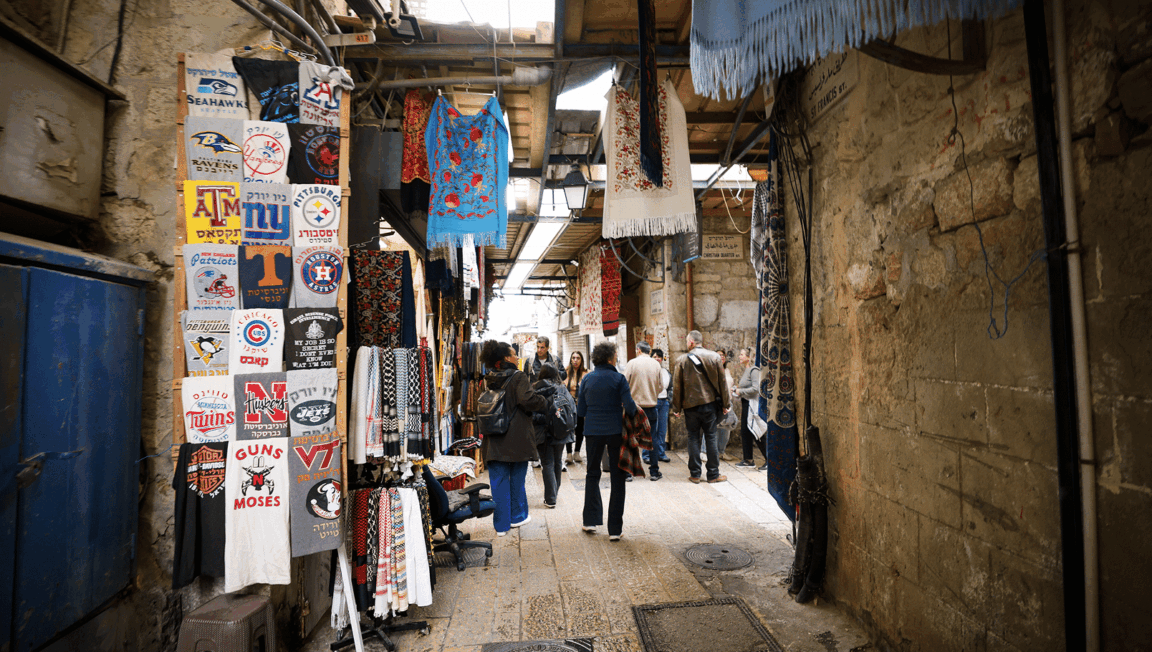
In December 2025, I visited the West Bank to get a first-hand impression of how people live there. Politicians are often criticised for speaking about things they do not understand — which is exactly why it is so important to talk to people on the ground and form our own impressions. During my visit to Hebron and East Jerusalem, I mainly wanted to understand the impact of Israeli settlement policy. What I experienced deeply shook me.
Surveillance everywhere


My strongest impression of the West Bank was this: constant control, everywhere. There are now well over 1,000 checkpoints that Palestinians have to pass through on a daily basis. Every movement is closely monitored — even our group was followed at every step. Many of these checkpoints are automated, meaning that an AI decides who is allowed to pass. Or who is shot. Facial recognition systems are directly linked to automated weapons, meaning that lethal force can be used instantly. But this applies even when simply crossing the street: large parts of the West Bank are under military law, meaning there are no courts that would prosecute such killings. As a result, Palestinians are killed almost daily by the army or by radical settlers — including elderly people, women and children.
Even children are radicalized
I also walked through residential areas in Hebron — a large Palestinian city that is increasingly being taken over by Israeli settlers. Today, it is effectively divided in two: on one side of the street, only Israelis are allowed to walk; on the other, Palestinians. Fences and walls run through the streets. In some places there are even overhead nets: settlers live above and throw rubbish and stones onto Palestinian shopping streets below. To protect themselves, residents have installed these steel nets over the streets. Many of the Palestinian civilians I spoke to reported harassment, long detours and sudden closures that often make daily life impossible: they can no longer get to the shops, their fields, their jobs or schools. They themselves openly describe the situation as apartheid — a term also used by Amnesty International.
This trip was not about the broader geopolitical picture. It was about Palestinian people and their everyday lives. And I have to say: I came away deeply disillusioned. These people are denied any form of normal life, deprived of dialogue, and forced into a system where they must compete among themselves for scarce resources and privileges. Responsibility for this lies with Israel and its brutal, ruthless and illegal settlement policy.
Of course, we also asked people on the ground what we, as Western politicians, could do for them. What they all want is for the world to stay attentive and to keep up the pressure on Israel. What is notably not at the top of their agenda is a two-state solution. The current situation is so entrenched, and Palestinian society so fragmented and powerless, that meaningful negotiations on equal terms seem almost impossible at this point.
Press release
Observations from the West Bank